[Animation of 1999 KW4, a binary near-Earth asteroid observed by Steve Ostro and his collaborators. Source: NASA]

My oldest brother Steve's and my vocations have both involved looking up at the sky, his a bit higher (astronomy) than mine (Earth's weather).
He tutored me in calculus in high school, which helped pave the way for me to tackle college-level math and become a meteorologist.
And being a lightning-phobic child, one of my most vivid memories was when he bought me take-out French fries from one of our favorite restaurants, coincidentally with the same name as mine (albeit spelled differently), Stewart's, which at the time had a drive-in in our hometown of Somerville, New Jersey. Seconds after entering our screened porch to eat, lightning which melted our neighbor's phone struck and my involuntary spasmodic response sent the fries flying all over the porch!
So this being TWC's weather blog, this entry does have connections to weather, but there is much more.
Another memory is that of our mother referring to Steve as a genius. He would modestly ask her to just say that he did good work.
Well, he did very, very good work. In addition to other awards, he was a recipient of the highest honor bestowed by the American Astronomical Society's Division for Planetary Sciences, the Gerard P. Kuiper Prize. Dr. Kuiper was the scientist after whom the Kuiper Belt is named. Other winners have included Carl Sagan, James Van Allen (the Van Allen radiation belts), and Eugene Shoemaker (of Comet Shoemaker-Levy 9). There's even an asteroid named after Steve: 3169 Ostro.
He was the pioneer in combining radar astronomy with the study of asteroids. Thanks to him as well as his collaborators, we here on Earth have a better understanding of the objects in space whose strikes upon our planet, fortunately much more infrequent than hurricanes or tornadoes, can in the worst-case scenario dwarf the effects of those meteorological phenomena.
A couple of years ago Steve's life took a turn when he began a brave battle with cancer. In addition to paying tribute to my big brother, I'm posting this entry to raise awareness of a couple of things.
Male breast cancer does occur, even though it is rare. More information is available via this portal.
Furthermore, such dread diseases can ironically begin with seemingly innocuous signs. If you have something that appears to be a bit anomalous going on in your body, have it checked out. Men don't typically receive routine breast exams, and my brother's cancer was not caught early enough; by the time he was diagnosed, the cancer had spread. (Incredibly, the cancerous cells may have, as estimated by his doctors, begun growing in his body as much as eight years before there were any detectable symptoms.)
Like hurricanes and tornadoes, cancer can hit anyone -- male or female, old or young, rich or poor, liberal or conservative, people of any race or religion or sexual orientation. It does not discriminate. In fact, it can even strike people who like my brother were previously in exceptional health.
Early yesterday morning, December 15, his struggle ended, the disease taking the life of a man who was a loved and respected relative, friend, colleague.
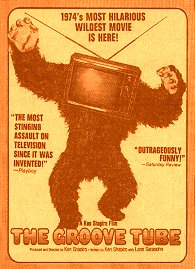
Curtis Mayfield's song "Move On Up," which I discovered in the soundtrack of the movie The Groove Tube when Steve took me to see it nearly 35 years ago, has gotten me through difficult times with its buoyant musical energy and lyric of "Move on up toward your destination, though you may find, from time to time, complications."
Steve encountered a big complication and fought it with tenacity and courage, and has now moved on up to his destination.
R.I.P., bro'.
Dr. Steven J. Ostro 1946-2008


No comments:
Post a Comment