Sunday, January 11, 2009

Early thunder on Saturday

The weekend could start off wet for many of us. Futuretrack_01022009

Low pressure in the upper atmosphere will push across Texas early Saturday. The first thunderstorms of the New Year will begin to develop after midnight. By daybreak Saturday there could be rumbling in the sky over most of the area ....an early wake-up call!

There is a slight risk some of the storms could produce large hail and damaging winds. Track the storms online with MegaDoppler 13, the most powerful radar in Houston.

Most of the moisture will move east, out of the Houston area by Saturday afternoon. At that time we could see a little clearing.

A few more showers could develop when the cool front arrives early Sunday. There won't be as much moisture in the air when the front arrives, so I'm not expecting as much rain. You'll notice the chance of rain is a lot lower on Sunday.

The north wind will blow much colder air this way on Monday. The kids will need coats when they head back to school!

Warm weekend, colder next week

Well, I slept fine last night. Thing is, I wasn't expecting it to be a silent night.

The upper low moved through southeast Texas very quickly, producing only a smattering of rain early this morning. I mentioned during the news on Friday and here on the Houston Weather Blog that if this upper low moves fast enough we could see some clearing behind it. The rest of the day should be sunny because of sinking air currents on the backside of the disturbance.

A cool front arrives on Sunday and there's still a slight chance of a shower along the front. Moisture will be limited so the chance is pretty low. Temperatures will be a little cooler and the humidity will drop as well. Sunday looks like it could be a good day for outdoor fun (or work, if you still need to take down your holiday lights.)

The real cold arrives just as the kids are heading back to school after the long holiday break. We'll be in the 40s all day Monday with gusty north winds. Moisture over-running the cold air will bring in thick clouds and showers. It's going to be a cold, wet day.

Hurricane Gustav's +200 mph winds

Www_g_sat_full_2When Hurricane Gustav passed over Cuba last August, the anemometer there was blown away by a 212 mph wind gust. If the data verifies it would be the fastest wind speed ever recorded in a hurricane!

Jeff Masters reports on his "Wunder Blog" that this could also be "the second highest wind gust ever measured on the surface of the planet." The current record is 231 mph recorded in April 10, 1934 at the Mount Washington weather observatory in New Hampshire.

The 212 mph wind gust in Gustav was recorded not along the coast, but in Paso Real de San Diego, about 15 miles inland. While the mountains in western Cuba probably helped funnel and accelerate the wind. Jeff explains, "When hurricanes make landfall, the intense thunderstorm cells that comprise the eyewall sometimes collapse suddenly, sending a downward cascade of intense winds to the surface."

We've always known the strongest, most destructive winds in a hurricane occur within the eyewall. That's what hit Houston during Hurricane Ike. "Hotspots" on the radar within the eyewall could signal a more intense downburst within the band of fierce winds.

Hurricane Ike seminar this Friday

There's still time to register for the Weather Museum's Hurricane Ike Seminar.

The conference will focus on Ike and the lessons we learned from that storm. Presentations start at 8 AM on the University of St. Thomas campus. I'll be participating in a media panel discussion after lunch. The conference is open to the general public. Registration fees are $25, only $10 for students.

For more information contact Benjamin Maloney at the Weather Research Center. His phone number is 713-529-3076.

ABC13 viewers capture the sunset

During 13 Eyewitness News early Wednesday evening, we issued a special "sunset alert." We knew the high-level, wispy cirrus clouds would provide a beautiful view as the sun dropped below the horizon. A perfect ending to a perfect day.

I asked you to grab your camera and take a few photos of the sunset...and you did! Thanks to everyone who emailed their "skyscapes" to ABC13. Here are some of the many photos sent to our inbox:

Libby_youngblood_in_porter
Libby Youngblood saw this view over Porter around 6:00 PM.

weatherblog.abc13.com

Jill_paxson_in_cypress
Jill Paxson found the waxing moon shining through the thin veil of clouds near Cypress.

weatherblog.abc13.com

Jackie_redmond_in_magnolia
Not every sunset is orange. Jackie Redmond captured the slate gray and blue sky over Magnolia.

weatherblog.abc13.com

Nicki_evans_in_anahuac
I love this picture of the clouds over Trinity Bay photographed near Anahuac by Nicki Evans.

weatherblog.abc13.com

Cynthia_canales_in_blessing
There weren't as many clouds in the sky over Blessing. But the view to the west was still very pretty, photographed here by Cynthia Canales.

weatherblog.abc13.com

Chris_kattner_in_conroe
The trees stand out in silhouette in this picture taken by Chris Kattner near Conroe.

weatherblog.abc13.com

Bill_roper_in_houston
Check out this picture from Bill Roper. Awesome!

When you capture an incredible view of the sky, send it to us!

It's 120° colder in Alaska!

Alaska_coldWhile we've been enjoying sunny, mild weather the last few days it has been unusually cold in the northern part of the continent. Temperatures have been -40 to -60 degrees below zero across interior Alaska and western Canada while we've been in the 60s and 70s.

weatherblog.abc13.com

Web_saturday_temps A little piece of that cold air will blow into southeast Texas this weekend. Our high temps will be in the upper 50s, which is about twenty degrees colder than it was on Thursday and Friday. And with a strong northwest wind, it will feel even colder.

Temperatures will climb a little next week. But I'm expecting another piece of cold air will drop south toward the end of next week, perhaps some of the coldest air of the season for us and for much of the country.

Time to dig out the coats again and stock up on firewood!

Saturday, January 10, 2009

It's beginning to look a lot like ...

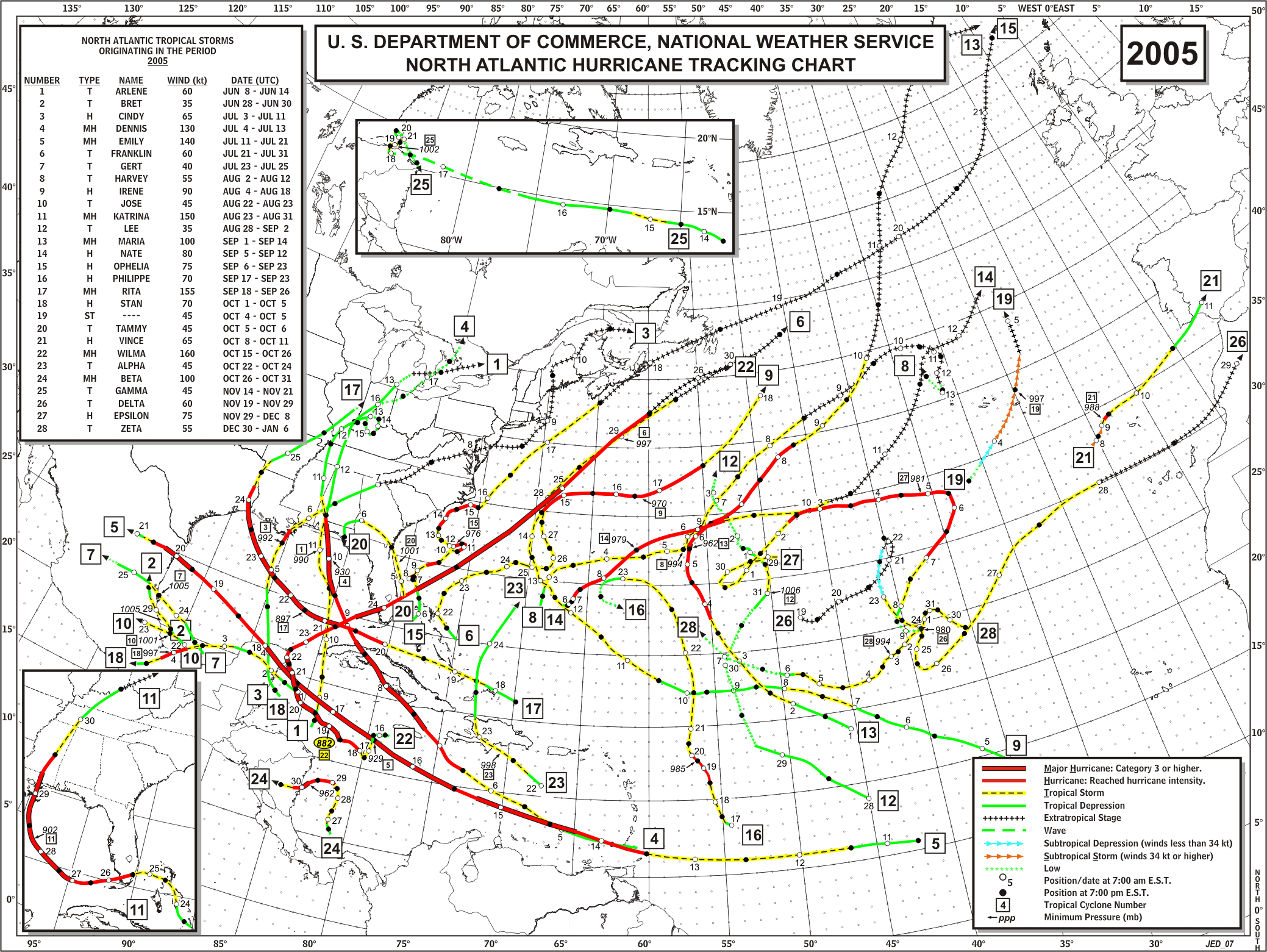
... well, not quite 2005. We're fortunately already falling behind that pace -- by now there had been the "E" storm as well as two major (Category 3+) hurricane landfalls, Emily in Mexico on this date and Dennis the week before in Cuba and the U.S -- but the tropical atmosphere is otherwise about as stoked as it ever gets at this point in the season.

On the satellite image (click on it for a much larger version), there is, at the time of this posting:

(1) Yet another well-organized low emerging off the coast of Africa.

(2) Bertha, still a tropical storm and continuing to set July records.

(3) A low spinning offshore just northeast of Jacksonville, Florida.

(4) A disturbance in the eastern Caribbean which keeps waxing and waning but can't yet be written off as it heads in the general direction of the Yucatan and Gulf of Mexico.

(5) A disturbance bringing locally heavy rain to Central America.

And, in the eastern Pacific:

(6) Tropical Storm Fausto.

(7) Hurricane Elida.


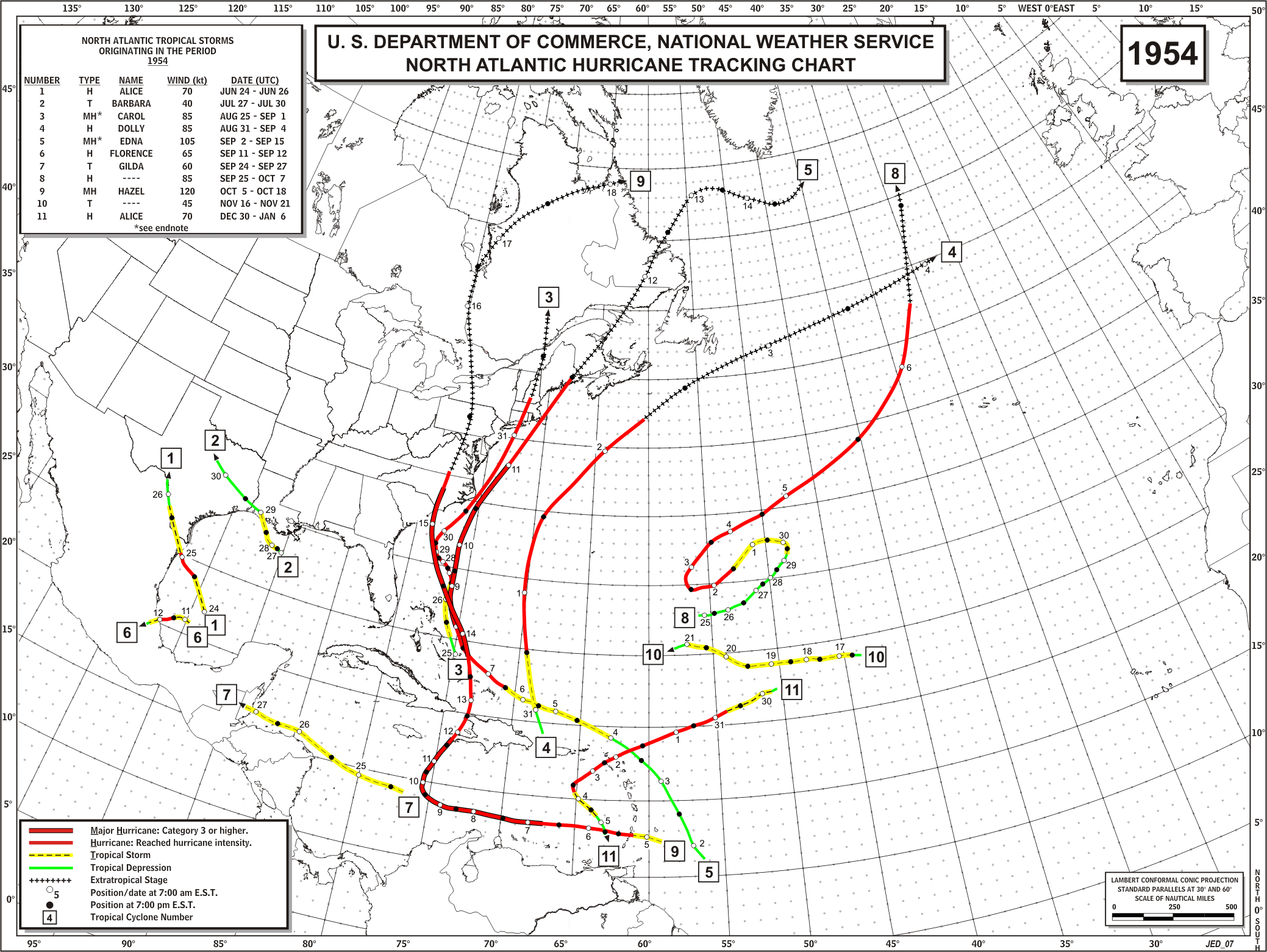
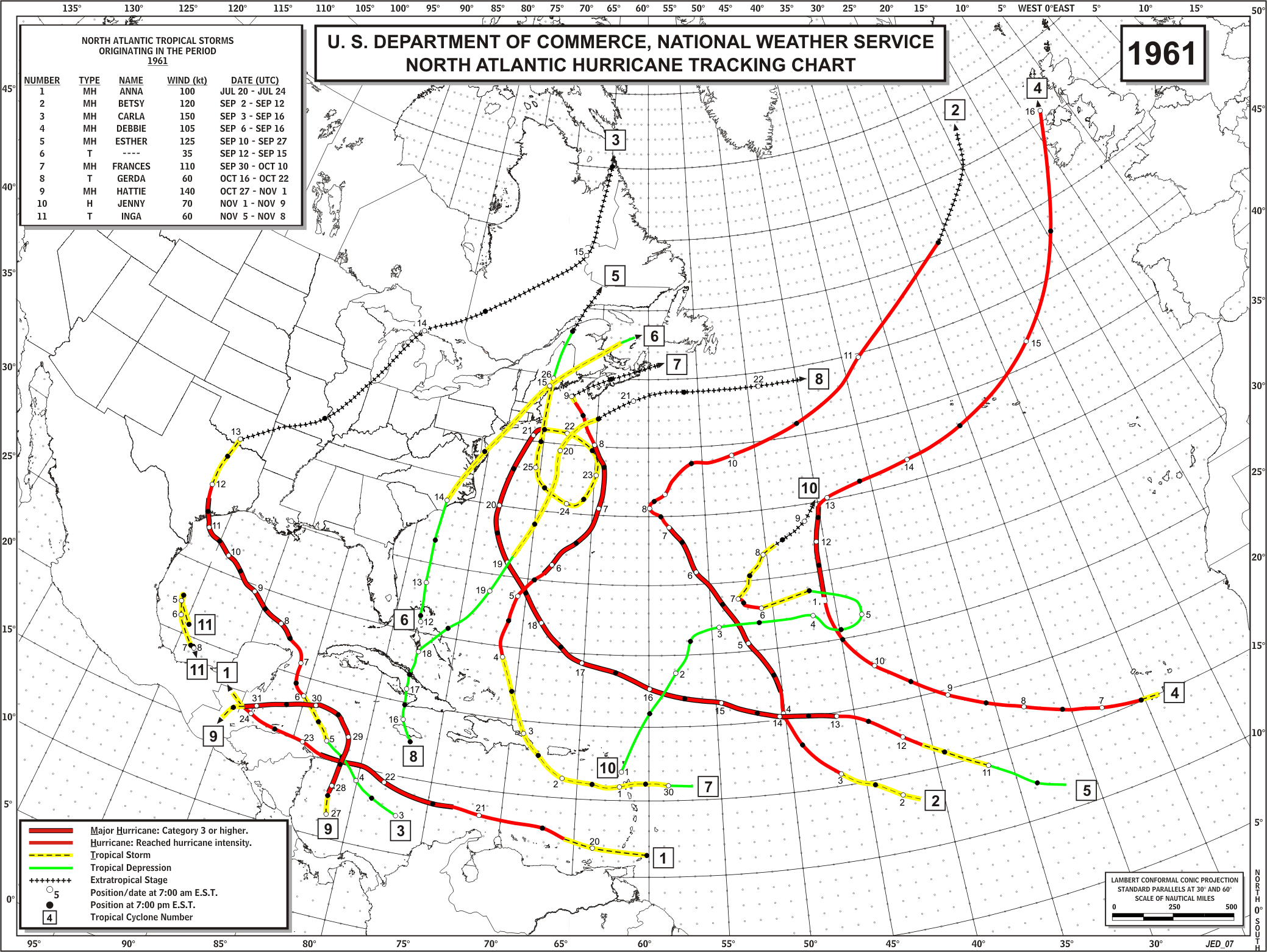
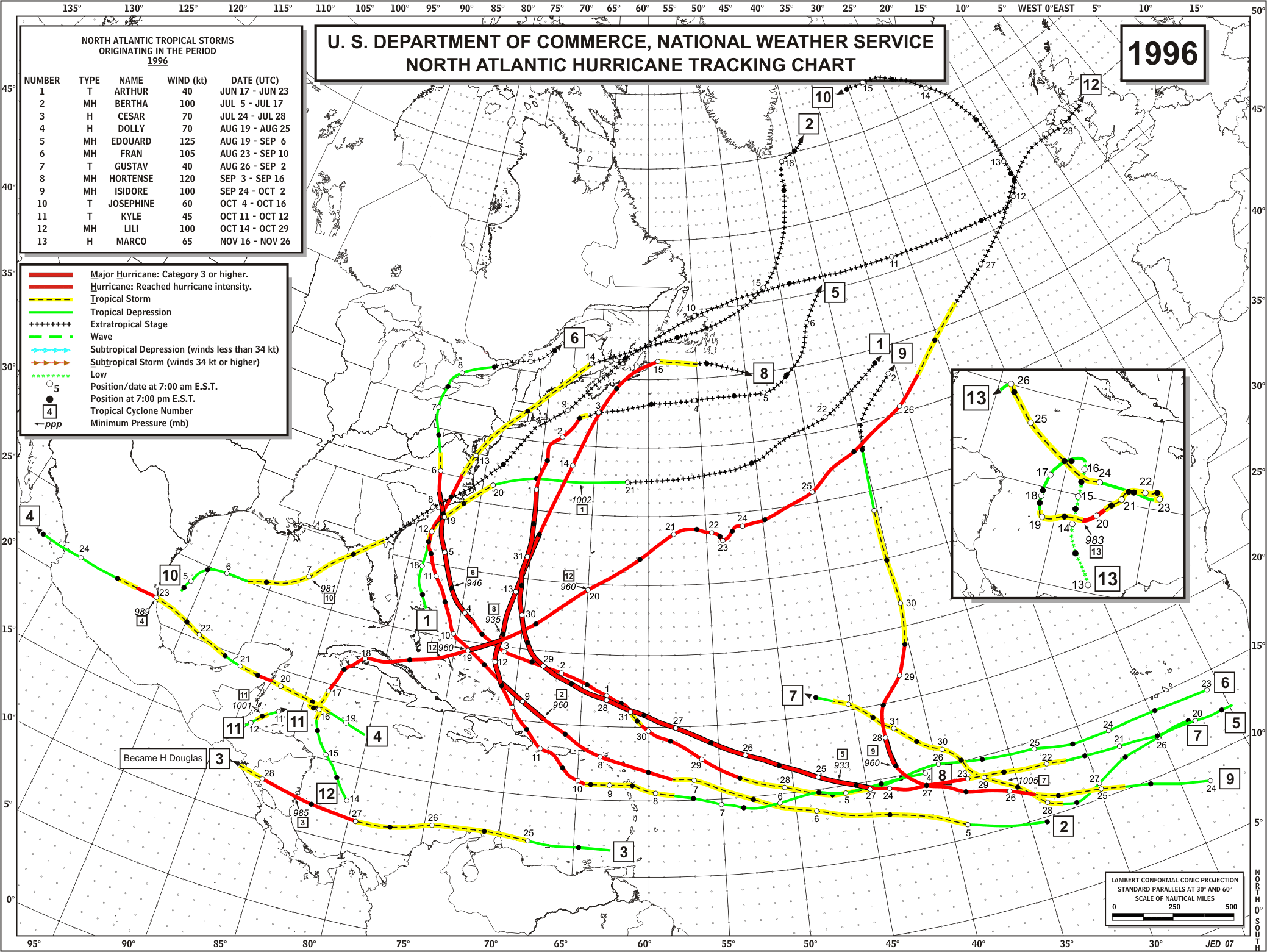
Based on historical data courtesy of Dr. Phil Klotzbach (of the CSU team with Dr. Bill Gray), since 1950 only five years in addition to 2008 have had a hurricane form in the tropical Atlantic east of 75W and south of 23.5N prior to August: 1954, 1960, 1961, 1996 and 2005.

Only four other years had a major hurricane form there prior to August: 1926, 1961, 1996, and 2005.

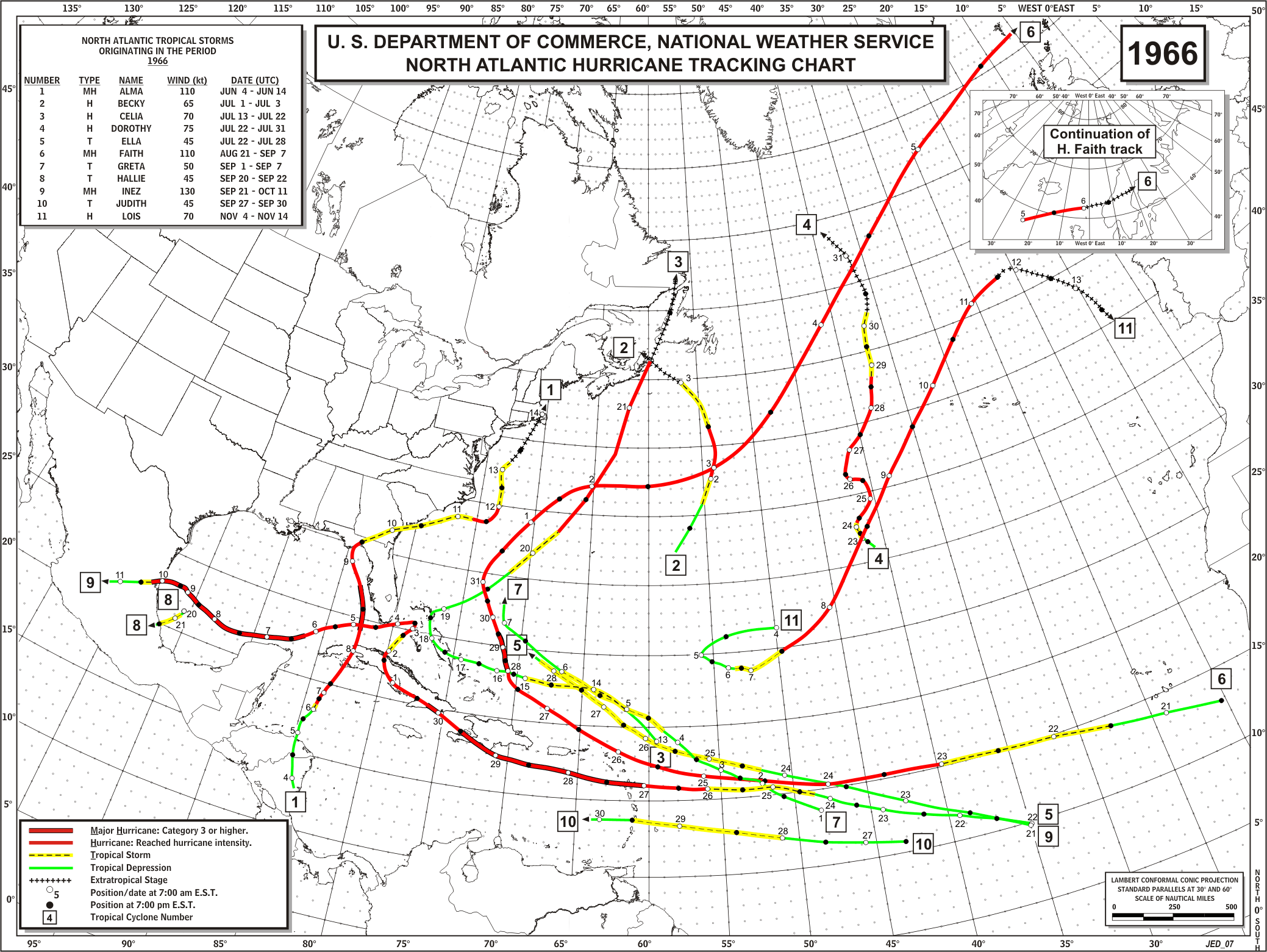
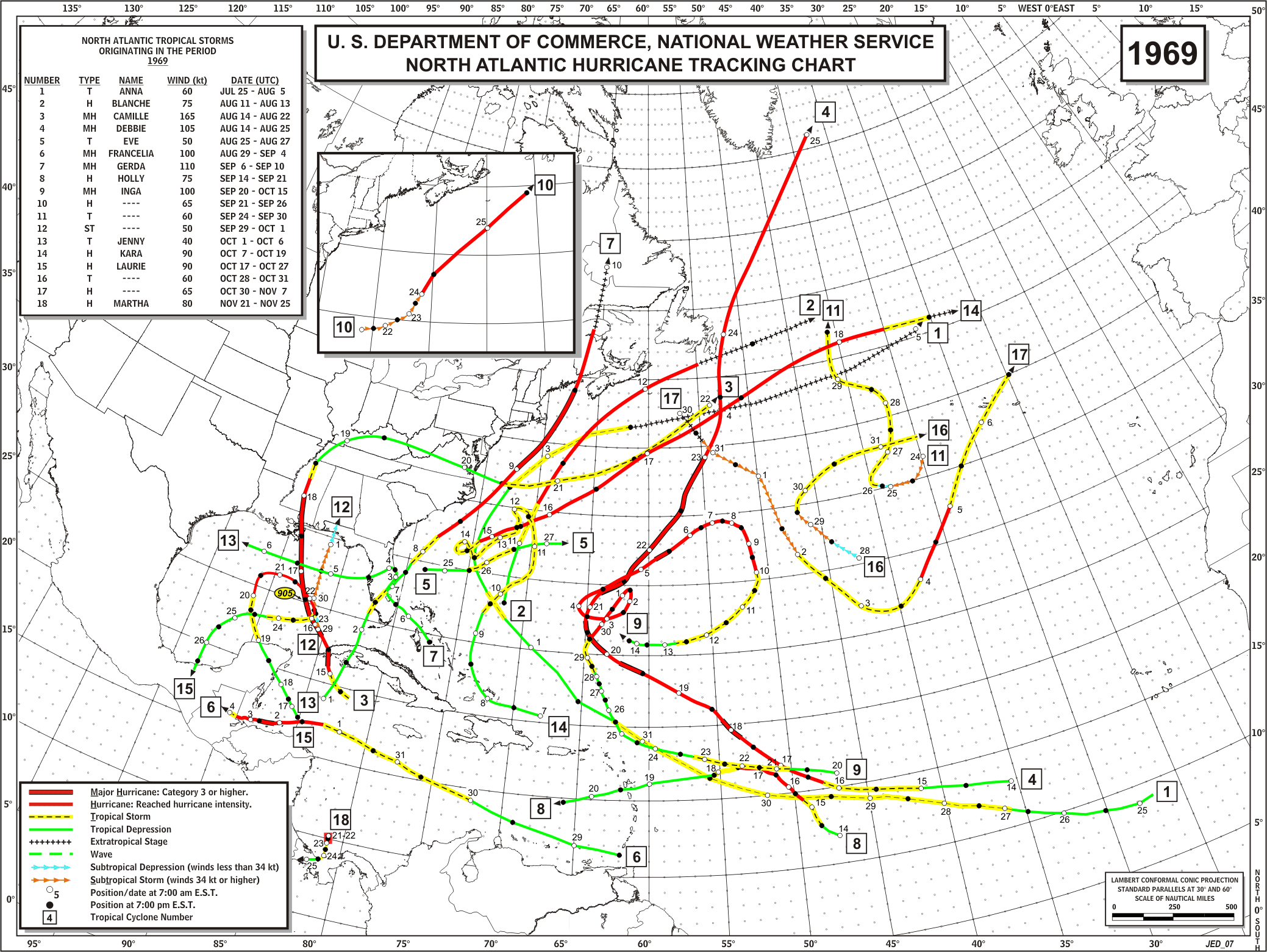
Other years with a notable amount of named storm days (NSD) in that area besides a few of the years already cited include 1966 and 1969.

All of the years listed above went on to have at least one very significant event:

1926 - The Great Miami Hurricane.
1954 - Three major hurricanes hit the East Coast of the U.S., including the legendary Hazel.
1960 - Hurricane Donna, which whacked the coast all the way from Florida to the Northeast.
1961 - Carla, a gigantic Category 4 that hit Texas.
1966 - Inez, a nasty hurricane which swept across the northern Caribbean islands, brushed South Florida, and ended up in Mexico.
1969 - Camille.
1996 - Fran, which made landfall in North Carolina shortly after that year's Bertha.
2005 - Well, we all know what happened that year.


Let's hope that the current situation changes and at the end of the season we look back and see that although July was inauspicious, the atmosphere settled down and/or the configuration of steering currents kept any significant tropical cyclones away from land ... but at the moment the character of the tropical atmosphere (the amount of convection, instability, spin, etc.) is much different than it was in July of the past two years, and is reminiscent of July during years past that did not have a good outcome.


UPDATE 3PM SATURDAY JULY 19

Still active ...

In the Pacific, Elida moved into stable air and weakened, while Fausto strengthened into a hurricane and is sending waves to the Mexican coast; the western Caribbean disturbance crossed over Central America, where it produced locally heavy rain, and has the potential to become a tropical cyclone in the eastern Pacific.

In the Atlantic, the disturbance which was northeast of Jacksonville, Florida is now closer to Jacksonville, North Carolina and has developed into Tropical Storm Cristobal as it skirts the coast.


The tropical wave in the eastern and now central Caribbean still bears watching and is still headed toward the Yucatan and Gulf of Mexico. Kingston, Jamaica today has had squalls with heavy rain and sustained winds briefly as high as 31 mph.


Bertha is still a tropical cyclone; in fact it reintensified into a hurricane.

The low in the extreme eastern Atlantic has fizzled but there's another strong disturbance over Africa that will emerge off the coast in a couple of days, and we're now heading toward the time of the year when the "Cape Verde season" typically ramps up (it got off to an early start this year with Bertha).